Claim Your Free Estimate Today
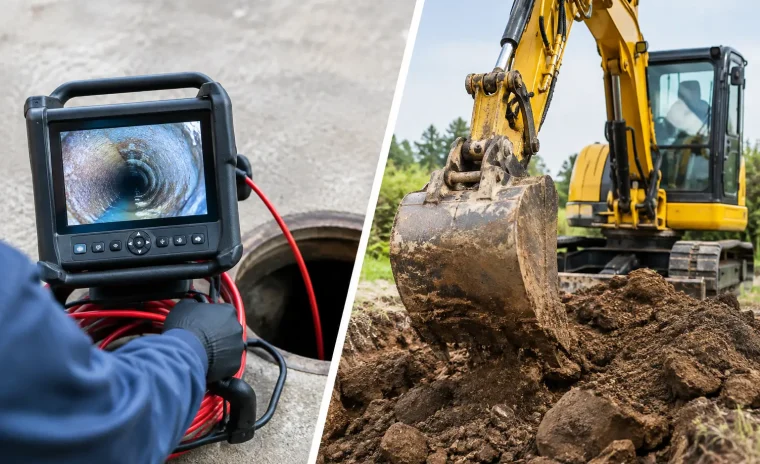
A sewer line can fail several feet below a clean front yard, a parking area, or the slab of your building. That is why the question is not simply drain camera versus excavation. The right question is what is happening inside the pipe, where the problem is located, and which repair will restore dependable flow without unnecessary disruption.
A drain camera inspection often gives us those answers before any digging begins. But a camera is a diagnostic tool, not a repair by itself. When a line has collapsed, separated, or suffered major damage, excavation may be the most direct and lasting solution. Clear diagnosis comes first, followed by clear options for your property.
Drain Camera Versus Excavation: Start With the Real Cause
Slow drains, recurring clogs, gurgling toilets, sewage odors, and backups may all point to a sewer drain problem. They do not automatically tell you whether the pipe needs cleaning, lining, spot repair, or replacement. Treating the symptom without identifying the cause can lead to repeat calls, more water damage, and higher costs over time.
A sewer camera is fed through an accessible drain or cleanout. It sends live video from inside the pipe, allowing a trained technician to see the pipe’s condition and identify the location of a blockage or defect. The inspection may reveal root intrusion, grease buildup, scale, a broken section, a pipe belly that holds water, shifted joints, cracks, or a collapsed line.
This information changes the conversation. Rather than guessing where to dig, a technician can explain what the camera found, how serious it is, and whether a less invasive option is appropriate. For Tucson-area homes with aging sewer systems, that can prevent a large excavation when a targeted repair or trenchless solution will handle the underlying issue.
When a Drain Camera Is the Better First Step
For most recurring drain or sewer concerns, camera inspection is the practical place to start. It is especially useful when the problem is hidden underground and there is no obvious evidence that the pipe has failed completely.
A camera can confirm whether a backup comes from a simple obstruction or a structural defect. If roots have entered through a joint but the pipe is otherwise sound, thorough drain cleaning or hydro jetting may restore flow. If the camera shows a limited damaged area, a spot repair may be possible. If the pipe has cracks or joint failures along a longer run but still holds its shape, trenchless sewer lining may provide a durable repair with far less disturbance than conventional digging.
Camera inspections also help property owners plan wisely. A line that is flowing today may show early warning signs, such as root growth, corrosion, offset joints, or developing cracks. Addressing those conditions before sewage reaches a bathroom, kitchen, or commercial floor can protect the property and reduce the chance of an emergency repair.
For commercial properties, the diagnostic value is even greater. A restaurant, retail space, office, or rental property cannot afford extended closures caused by a surprise excavation. Camera findings help management understand the risk, schedule work around operations when possible, and choose a repair scope based on actual conditions rather than assumptions.
What Excavation Solves That a Camera Cannot
Excavation becomes necessary when the pipe is too damaged for cleaning, lining, or another trenchless method. A camera can show the problem clearly, but it cannot reconnect separated pipe, correct a severe pipe belly, or rebuild a section that has collapsed.
Digging may be the right choice when a sewer line has major offsets, crushed sections, extensive deterioration, or a break that prevents equipment from passing through. It can also be necessary when the pipe has a grade problem. A sewer line needs the proper slope to carry waste away. If a section has settled and continually holds water and debris, cleaning may provide temporary relief, but correcting the slope often requires access to the pipe from above.
Excavation is not automatically a sign that something was missed or that every other option failed. Sometimes it is simply the repair that allows a technician to remove failed material, rebuild the connection correctly, test the line, and restore long-term performance. The key is making that decision with evidence from the inspection.
A good excavation plan should be specific. You should know the approximate repair location, why digging is recommended, what portion of the line will be replaced, how the work area will be protected, and what restoration may be needed afterward. Clean workmanship and organized scheduling matter because sewer repairs affect the areas you use every day.
The Trade-Offs: Cost, Disruption, and Long-Term Results
A camera inspection is generally the least disruptive and least costly part of the process because it diagnoses the issue without opening the ground. That does not mean it will always lead to a small repair. It means you have a better basis for deciding what to do next.
Trenchless lining can be an excellent middle ground for qualifying pipes. It may avoid damage to landscaping, hardscape, or flooring while creating a new pipe within the existing line. However, lining is not appropriate for every situation. The existing pipe must be accessible and structurally suitable enough to receive the liner. A badly collapsed line or a section with serious slope issues may still need excavation.
Excavation usually brings more labor and restoration work, especially if the line runs beneath concrete, mature landscaping, a driveway, or an occupied commercial area. Yet it may be the better value when it corrects a failure that would otherwise continue causing backups. Choosing the least expensive option without considering the pipe’s actual condition can turn a repair into a cycle of temporary fixes.
For a property owner, the best choice depends on the location and length of the damaged pipe, the material and age of the line, soil movement, root activity, access points, and whether there is active sewage backup. In Southern Arizona, older properties may have aging materials and roots searching for moisture around pipe joints. The camera footage helps turn those variables into a practical repair recommendation.
What to Expect From a Proper Sewer Diagnosis
A dependable plumbing team should not pressure you toward excavation before explaining what was found. The process should begin by assessing the symptoms and checking accessible fixtures and cleanouts. If the concern appears to involve the main sewer line, a camera inspection can map the condition of the pipe and identify the failure point.
From there, you should receive clear options. A blockage may call for cleaning and follow-up maintenance. Root intrusion may require hydro jetting and a repair to the affected joint. Longer sections of cracking may be candidates for trenchless lining. Severe separation, collapse, or grade failure may require excavation and pipe replacement.
If excavation is recommended, ask whether there are trenchless options and why they do or do not fit your line. Also ask how the repair area will be handled, whether the line will be tested after repair, and what restoration is included. Straight answers help you compare the immediate cost with the likelihood of repeat failures.
Do Not Wait for a Full Sewer Backup
A recurring drain problem rarely improves on its own. If several fixtures drain slowly, toilets gurgle when water runs elsewhere, sewage is surfacing outside, or wastewater has backed up indoors, stop using water fixtures as much as possible and arrange professional service promptly. Continued use can force more wastewater into the property.
Acclaimed Drain And Plumbing Solutions LLC uses camera-based diagnosis to help Southern Arizona property owners make informed repair decisions. Whether the answer is cleaning, trenchless repair, or carefully planned excavation, the goal is the same: restore proper flow and address the condition that caused the problem.
The ground does not need to be opened on a guess. Start with a clear look inside the line, then choose the repair that gives your home or business the strongest path back to reliable service.